
More Consistent Player Switching
We’ve improved player selection when contesting loose balls.
The game now more accurately determines which player has the best chance of reaching the ball first by taking into account the time required to get there.
If the situation changes and another player becomes better positioned to reach the ball, the system can adjust its initial selection.
We’ve also addressed situations where:
control switched between players multiple times after an aerial pass;
control remained with a player who was no longer relevant after a low cross;
after an unsuccessful tackle, control briefly switched to a teammate before returning to the original player.
Player switching is now more consistent and less likely to take control away at the wrong moment.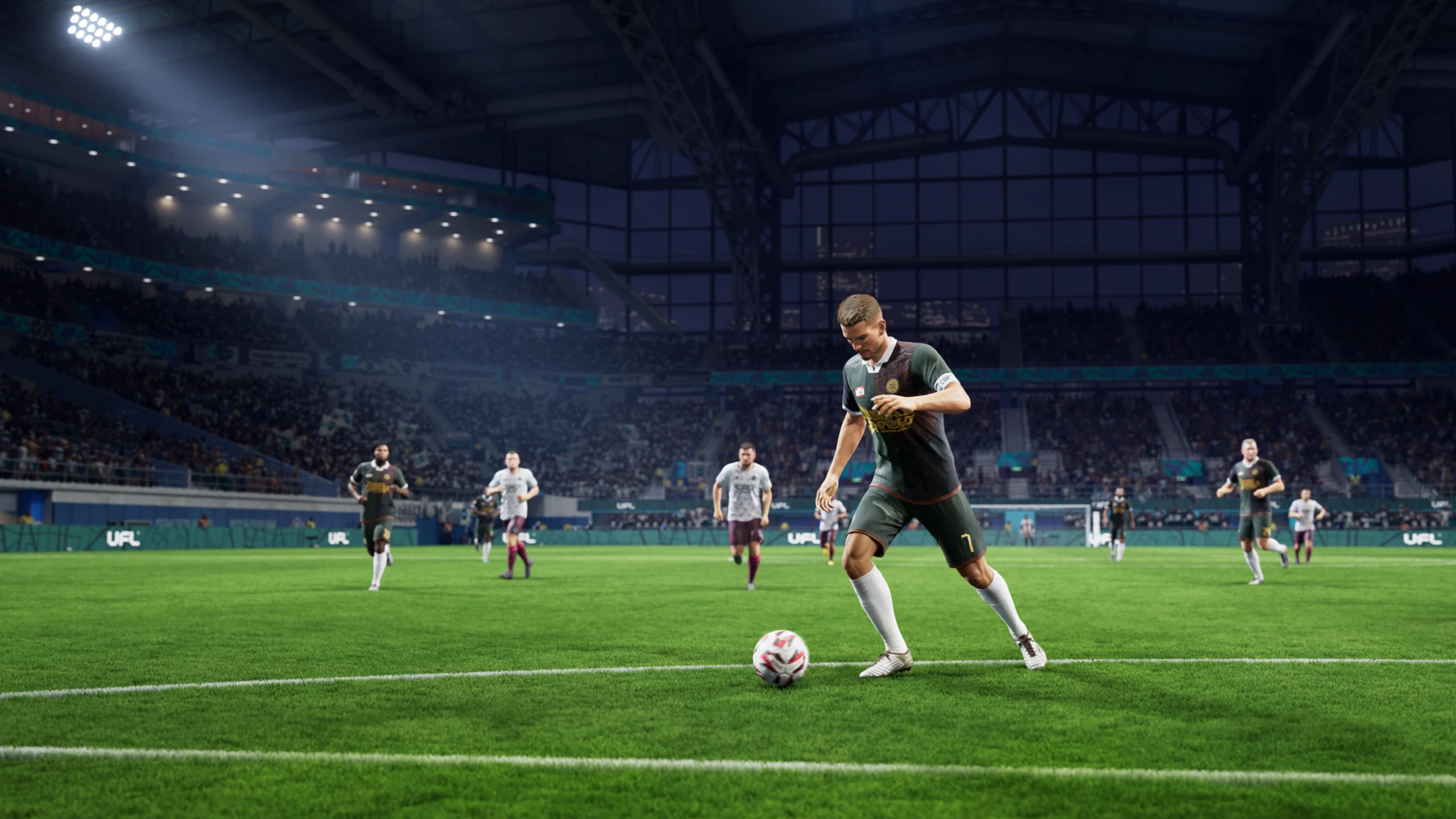
Reworked Stamina System
We’ve changed stamina consumption and fatigue penalties.
When a player’s current energy is low, active play causes fatigue to build up more quickly. We’ve also adjusted the impact of fatigue on characteristics and rebalanced stamina-related Skills.
Maintaining a high intensity throughout the match now comes with more noticeable consequences.
Choosing the right moments to sprint, press, and perform other energy-intensive actions — while keeping an eye on your players’ condition throughout the match — is now more important.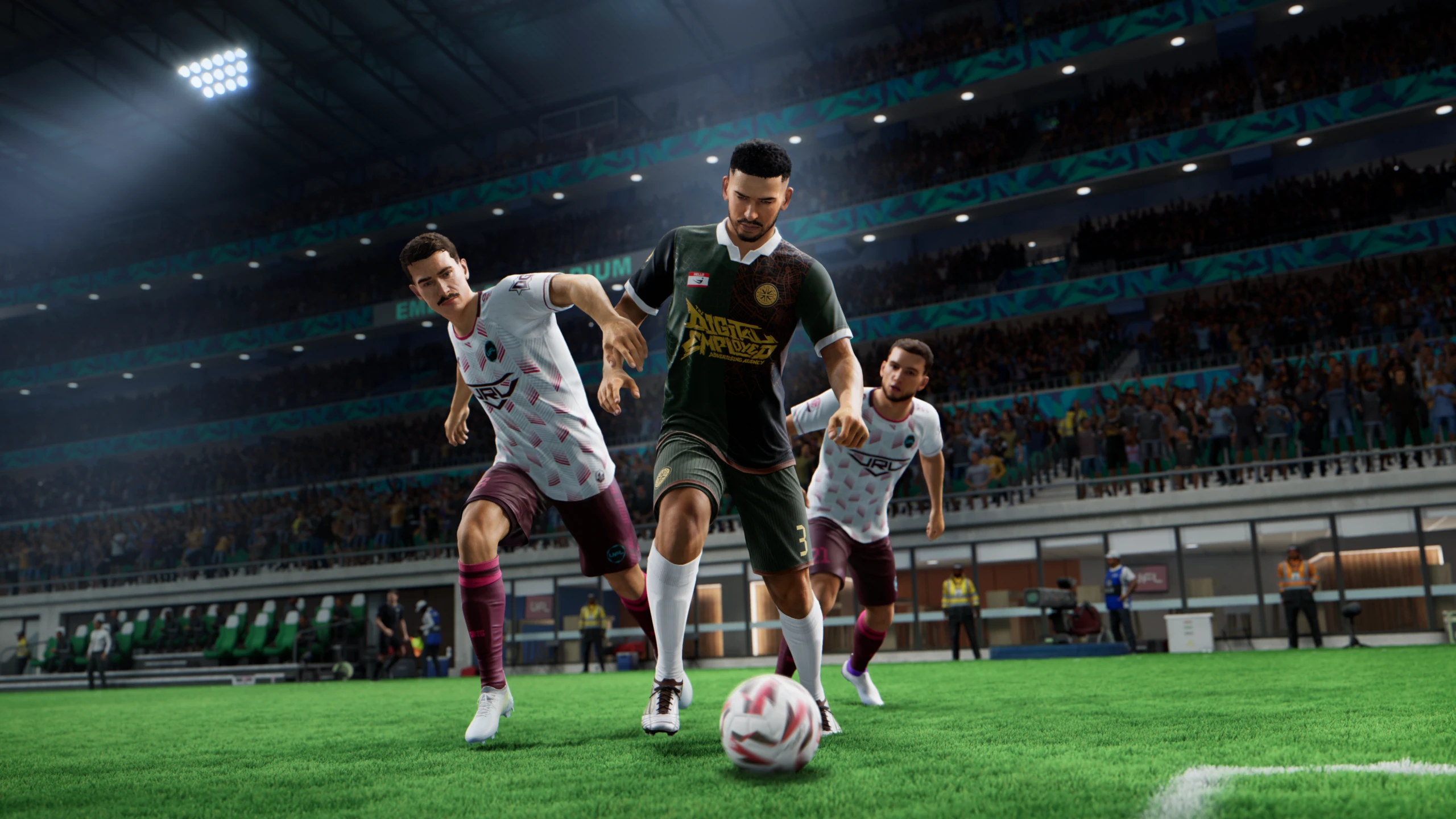
Agility and Defence Awareness Play a Bigger Role in Movement
Agility now has a more noticeable impact on the speed and responsiveness of changes in movement direction.
The difference between more agile and less mobile players is now more apparent in direct control.
In Jockey, defender movement is also influenced by Defence Awareness. Players with high Defence Awareness move more effectively when containing an opponent.
As a result, characteristics better reflect each footballer’s strengths in their role.
Dear UFL Players,
Season 26/27 marks the next step in UFL’s evolution, with a strong focus on how the game feels and plays. We’ve introduced major gameplay updates, reworked the player characteristic system, unveiled a new main menu, and prepared a new lineup of events.
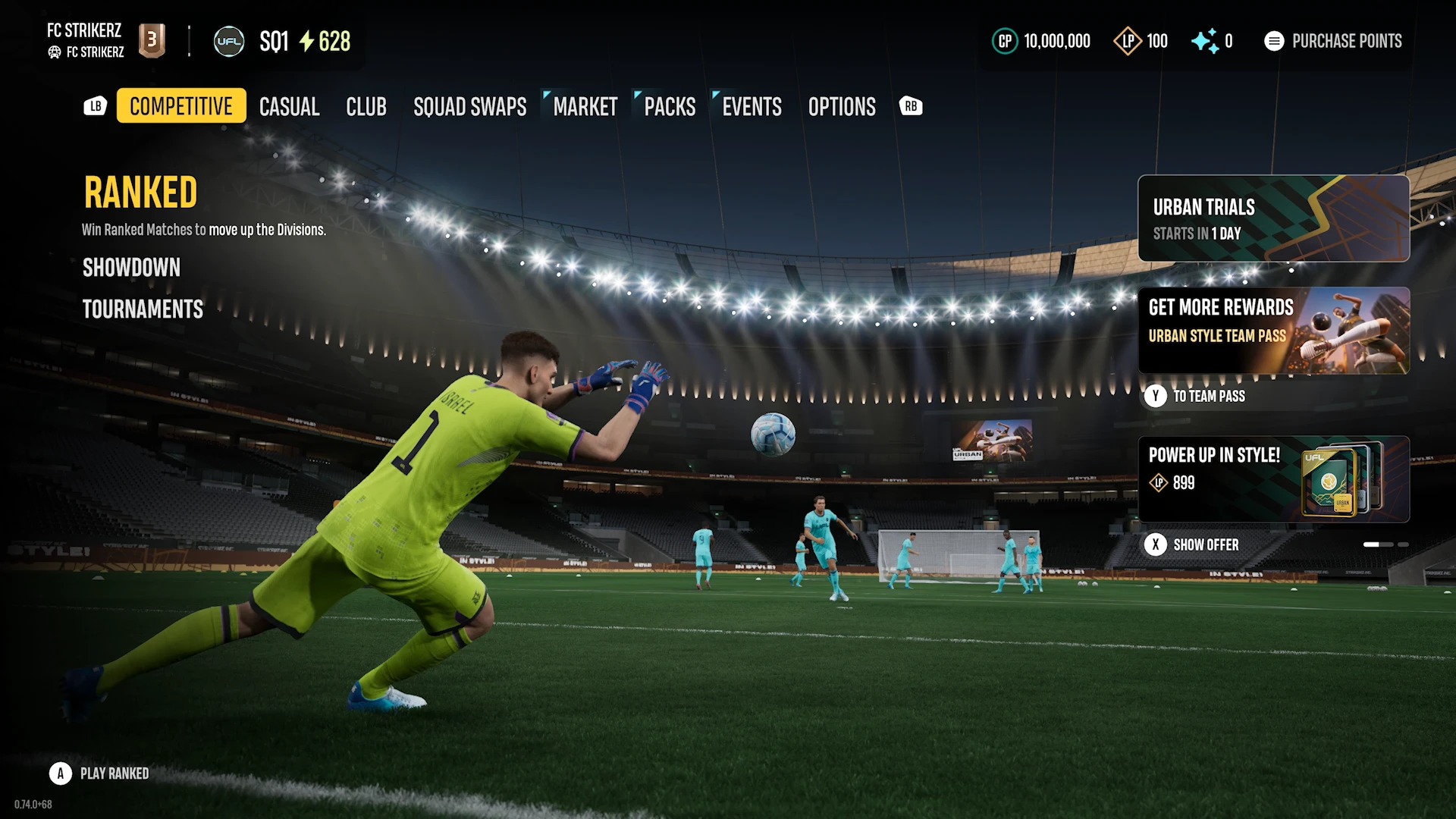
Your decisions and actions now have a greater impact on matches, player characteristics better reflect each footballer’s individual qualities, and a fully redesigned main menu makes it easier to navigate UFL’s key features and content.
And this is only the beginning of Season 26/27.
Here’s a look at the biggest changes already waiting for you in UFL.
- Gameplay
More control. Greater emphasis on timing, positioning, and your decisions. - Players
More detailed characteristics that better reflect each footballer’s individual strengths. - New Main Menu
A fresh look and easier navigation. - Urban Style
A new Team Pass and Urban Trials set the stage for Season 26/27 events.

Skill Now Matters More in Defense
We’ve adjusted defensive AI behavior and reduced automatic assistance to give you greater control over your defenders.
Successful defending now depends more heavily on your decisions: timely player switching, proper positioning, reading your opponent’s actions, and manual control.
AI assistance remains part of the game, but your own actions and skill now play a greater role in defending.
Teammates Are More Active in Attack
We’ve improved the behavior of AI-controlled players during attacking play.
Better Positioning in the Box
Players now respond more effectively to the position of the ball and the situation around them.
When the ball is inside the opponent’s penalty area, teammates make themselves available more actively for short passes. Outside the box, they position themselves better for low deliveries and crosses.
As a result, off-the-ball movement is more responsive to the situation, giving you more options to keep attacks moving.
Smarter Runs
We’ve also improved how players respond to the offside line.
When making runs, they now better account for the position of the ball carrier, opposing defenders, and open space, looking to move into areas where they can be found more easily with a Through Ball.
Players are also more aware of the offside line and can slow down or stop when appropriate to remain available for a pass.
This helps reduce unnecessary offsides and runs into areas where the ball is difficult to play.
Player Characteristics Rebalanced
We’ve reworked how player characteristics affect core gameplay mechanics.
Even players with high characteristics now operate within a more balanced gameplay model. Differences in characteristic levels remain noticeable during matches, but they will no longer result in excessive advantages in the speed, accuracy, or effectiveness of individual actions.
As a result, gameplay situations are easier to read, giving you more time to make decisions. Player characteristics still have a clear impact on performance, preserving the distinct strengths of individual footballers.
The changes are designed to keep these differences meaningful without allowing characteristics alone to become the deciding factor.
The calculations behind overall characteristics and the rating of new-season cards have also been adjusted: the more important a particular characteristic is for a player’s position, the greater its impact on the final value.
Passing Now Depends More on Player Characteristics
We’ve reworked regular Passes, Driven Passes, and Through Balls.
The passer’s characteristics now have a greater impact on pass power, accuracy, and buildup speed. We’ve also improved the consistency of pass destination selection.
Differences between footballers with different passing characteristics should now be more noticeable during matches.
Improved Ball Reception
We’ve added new ball reception animations.
Reception quality now depends on the quality of the pass, the receiving player’s characteristics, and pressure from opponents.
This allows players to adapt more naturally to each gameplay situation, reducing the chances of unsuitable animations disrupting an attack.
More Natural Interceptions
We’ve adjusted how defenders react to passes.
Players no longer begin an interception immediately after a pass is made. Their reaction time now depends on several factors:
- whether the player is controlled by the user or AI;
- the direction and speed of his movement;
- his distance from the ball’s trajectory;
- his Defence Awareness characteristic.
This reduces near-instant automatic interceptions and creates more room for passing.
At the same time, reading the game manually and choosing the right defensive position are now even more important.
Improved One-Touch Shots
We’ve improved input handling for one-touch shots.
The shot power buildup system now better accounts for the moment of contact with the ball. We’ve also added the new One Touch characteristic, which affects shot accuracy, dispersion, and power buildup.
Players with high One Touch are now more effective at finishing first time, making the characteristic’s impact particularly noticeable in quick shooting situations.
Player Characteristics Get More Detailed
We’ve updated the player characteristic system to make it more detailed and intuitive. Some existing characteristics have been split into separate parameters, others have been renamed, and new characteristics have also been added.
Tackles has been split into two separate characteristics: Standing Tackle and Sliding Tackle.
Pass Accuracy has undergone a similar change, with Short Pass and Long Pass now represented as separate characteristics.
We’ve also renamed several characteristics:
- Attack Positioning → Attack Awareness
- Defence Positioning → Defence Awareness
- Awareness → Field Vision
- Positioning (GK) → GK Awareness
In addition, two new characteristics have been added to the Fitness group: Aggression and Balance.
Passing now includes the new Pass Positioning characteristic.
Shooting gains the new One Touch characteristic, with Heading also moved to this group.
These changes allow each footballer’s individual qualities to be represented more accurately while making player cards clearer and more informative.